• Skip to primary navigation
  • Skip to main content
  • Skip to primary sidebar
Gita Wisdom - Teachings for the Modern Day Yogi
  • About
    • About Gita Wisdom
    • The Bhagavad Gita
    • The Gita Wisdom Staff
  • Prabhupada
    • Srila Prabhupada’s Books
    • Rock On, With Care
  • Watch
  • Listen
    • Podcasts
    • Interviews
  • Read
    • Books
      • Non-Fiction
      • Fiction
      • Children’s Books
    • Editorials
  • Topics
    • Art
    • Environment
    • Gita Verses
    • War and Peace
    • Workplace
    • Yoga
  • Extras
    • Quiz Questions
    • Vocabulary
  • Connect

Podcast

March 3, 2019 by Gita Wisdom

October 4, 2018 – Long Island Series, Week 19: Priest, warrior, merchant, worker [BG 4.13-15]

Topics:

  • Varna-ashram system (the four castes and four life stages)
  • Vedic conception of work and distribution of wealth

Additional topics:

  • Becker’s “The Denial of Death” and it’s parallels to the teachings of Gita
  • Agha, the terrible demon

Stream


Subscribe

[iTunes] [Stitcher] [Hipcast] [Spotify]

Mentioned in this podcast

Abbreviations used in these notes: BG for Bhagavad Gita

Books

  • Bhagavad Gita As It Is
  • Denial of Death by Ernest Becker

Verses

BG 4.13

cātur-varṇyaṁ mayā sṛṣṭaṁ
guṇa-karma-vibhāgaśaḥ
tasya kartāram api māṁ
viddhy akartāram avyayam

cātuḥ-varṇyam — the four divisions of human society; mayā — by Me; sṛṣṭam — created; guṇa — of quality; karma — and work; vibhāgaśaḥ — in terms of division; tasya — of that; kartāram — the father; api — although; mām — Me; viddhi — you may know; akartāram — as the nondoer; avyayam — unchangeable.

According to the three modes of material nature and the work associated with them, the four divisions of human society are created by Me. And although I am the creator of this system, you should know that I am yet the nondoer, being unchangeable.

BG 4.14

There is no work that affects Me; nor do I aspire for the fruits of action. One who understands this truth about Me also does not become entangled in the fruitive reactions of work.

BG 4.15

All the liberated souls in ancient times acted with this understanding of My transcendental nature. Therefore you should perform your duty, following in their footsteps.

Vocabulary

  • varnashrama – the four castes and four life stages
  • brahmin – member of the priesthood
  • ksatriya – member of the warrior or administrative class
  • vaisya – member of the merchant or farmer class
  • shudra – member of the worker class
  • brahmacharya – the celibate, student stage of life
  • grihastha – the married stage of life
  • vanaprastha – the retired stage of life
  • sannyasa – the renounced stage of life

Quiz Question

QUIZ START

See What We’re Up To

[Instagram] [Facebook Page] [Facebook Discussion Group] [Event Calendar]

Filed Under: Podcast Tagged With: agha, varnashram

February 8, 2019 by Gita Wisdom

September 27, 2018 – Long Island Series, Week 18: Demigods [BG 4.12]


Who and what are the demigods and what is their role?

Topics include:

  • Worship of the demigods
  • How demigods differ from Krishna and his avatars

Additional topics include:

  • The intention behind service
  • Yogi scientist Richard L. Thompson (Sadaputa)
  • The mysterious universe and yogic powers
  • Developing love of God [Nine Stages of Bhakti]

Stream


Subscribe

[iTunes] [Stitcher] [Hipcast] [Spotify]

Mentioned in this podcast

Abbreviations used in these notes: BG for Bhagavad Gita, CC for Caitanya Caritamrta

Books

  • Bhagavad Gita As It Is
  • Mahabharata
  • Gaura Ganoddesha Dipika
  • Vedic Cosmography by Richard L. Thompson

People

  • Richard L. Thompson (Sadaputa dasa)
  • Caitanya Mahaprabhu

Verses

BG 4.12

kāṅkṣantaḥ karmaṇāṁ siddhiṁ
yajanta iha devatāḥ
kṣipraṁ hi mānuṣe loke
siddhir bhavati karma-jā

Men in this world desire success in fruitive activities, and therefore they worship the demigods. Quickly, of course, men get results from fruitive work in this world.

CC Madhya 20.108

It is the living entity’s constitutional position to be an eternal servant of Kṛṣṇa because he is the marginal energy of Kṛṣṇa and a manifestation simultaneously one with and different from the Lord, like a molecular particle of sunshine or fire. Kṛṣṇa has three varieties of energy.

Vocabulary

atma – the non-material self, the source of consciousness in the body
kali yuga – the current and most problematic age in the cycle of four cosmic ages
prasadam – literally “mercy”; food that has become sanctified by first offering it to God

Other

  • Picture of Arjuna’s chariot
  • Kalapa Gram (cave in the Himalayas where elevated yogis wait for the coming of the new Golden Age)
  • Nine Stages of Bhakti
  • Sadaputa’s YouTube channel
  • Siksastakam (Listen to a few verses by Gaura Vani and As Kindred Spirits)

Vaishnava Pranams

vancha-kalpatarubhyas ca kripa-sindhubhya eva ca
patitanam pavanebhyo vaishnavebhyo namo namah
I offer my respectful obeisances unto all the Vaishnava devotees of the Lord. They are just like desire trees who can fulfill the desires of everyone, and they are full of compassion for the fallen conditioned souls.


Test Your Knowledge

QUIZ START

See What We’re Up To

[Instagram] [Facebook Page] [Facebook Discussion Group] [Event Calendar]

Filed Under: Podcast Tagged With: demigods, podcast, sadaputa

October 25, 2018 by Gita Wisdom

October 25, 2018 – Long Island Series, Week 20: The Psychic Roots of Karma [BG 4.16-18]

Verses 16-18 of Chapter 4 talks about action, forbidden action, and inaction and the resulting karmic reactions. We discuss the different kinds of karma, how karma plays out over lifetimes, and whether or not we, as spiritual practitioners, are obliged to assume greater social responsibilities. We also discuss the psychology of karma.

Topics:

  • Karma, vikarma, and akarma
  • Yoga as a call to action
  • The link between one’s psychology and karma
https://gitawisdom.org/wp-content/uploads/2018/10/LIS20-Withdraw-Not-an-Option-Audiogram.mp4

Stream


Subscribe

[iTunes] [Stitcher] [Hipcast] [Spotify]

Mentioned in this podcast

Abbreviations used in these notes: BG for Bhagavad Gita, SB for Srimad Bhagavatam

Books

  • Bhagavad Gita As It Is

Verses

BG 4.16

kiṁ karma kim akarmeti
kavayo ’py atra mohitāḥ
tat te karma pravakṣyāmi
yaj jñātvā mokṣyase ’śubhāt

kim — what is; karma — action; kim — what is; akarma — inaction; iti — thus; kavayaḥ — the intelligent; api — also; atra— in this matter; mohitāḥ — are bewildered; tat — that; te — unto you; karma — work; pravakṣyāmi — I shall explain; yat — which; jñātvā — knowing; mokṣyase — you will be liberated; aśubhāt — from ill fortune.

Even the intelligent are bewildered in determining what is action and what is inaction. Now I shall explain to you what action is, knowing which you shall be liberated from all misfortune.

BG 4.17

The intricacies of action are very hard to understand. Therefore one should know properly what action is, what forbidden action is and what inaction is.

BG 4.18

One who sees inaction in action and action in inaction is intelligent among men, and he is in the transcendental position, although engaged in all sorts of activities.

BG 6.41

The unsuccessful yogī, after many, many years of enjoyment on the planets of the pious living entities, is born into a family of righteous people, or into a family of rich aristocracy.

BG 8.6

Whatever state of being one remembers when he quits his body, O son of Kuntī, that state he will attain without fail.

BG 15.8

The living entity in the material world carries his different conceptions of life from one body to another, as the air carries aromas. Thus he takes one kind of body and again quits it to take another.

SB 10.14.8

My dear Lord, one who earnestly waits for You to bestow Your causeless mercy upon him, all the while patiently suffering the reactions of his past misdeeds and offering You respectful obeisances with his heart, words and body, is surely eligible for liberation, for it has become his rightful claim.

Kumbha Mela – Currently, the world’s largest gathering of people. Over 100 million pilgrims from around the world will bathe at the confluence of the Ganges, Saraswati, and Yamuna rivers in India.

Vocabulary

  • pranayama – yogic breathing techniques
  • paramatma – “Super-soul,” God in the heart of each being as witness and well-wisher accompanying each soul through its many births
  • karma – Material actions (performed for one’s own benefit or one’s extended circles)
  • akarma – Actions offered in devotion to God, which consequently do not generate material reactions.
  • vikarma – Actions performed that intentionally contradict scriptural guidelines of righteous behavior.
  • yoga-bhrashta – Someone who practiced yoga in previous lives but did not complete the yoga path, and consequently is born into circumstances favorable to resuming yoga practice, e.g. into a wealthy or spiritually inclined family.
  • tapas – A sacrifice of something personal for a higher good, e.g. of time for self-discipline, solitude, or prolonged meditation.

Quiz Question

QUIZ START

See What We’re Up To

[Instagram] [Facebook Page] [Facebook Discussion Group] [Event Calendar]

Filed Under: Podcast Tagged With: agha, varnashram

August 30, 2018 by Gita Wisdom

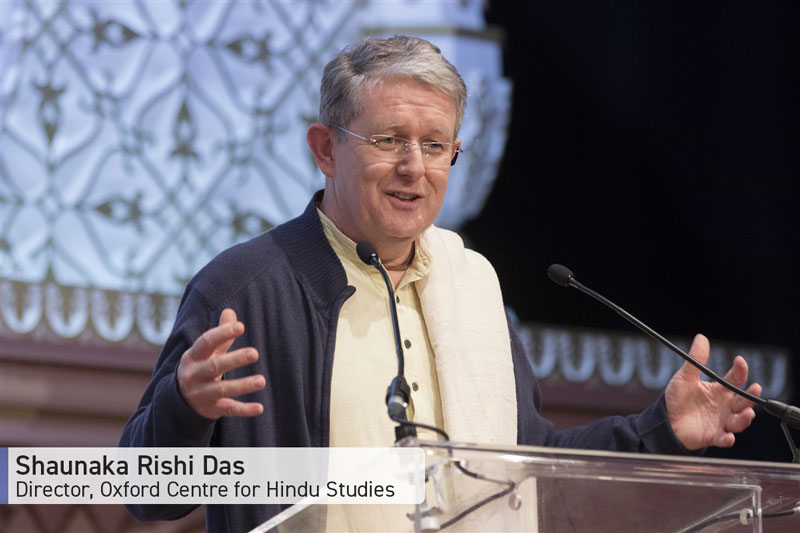
Aug 30, 2018 – LI Series, Week 16, Interview with Shaunaka Rishi Das

Special Guest: Shaunaka Rishi Das (Timothy Kiernan), Director of the Oxford Centre for Hindu Studies, stops by for an enlightening chat with Joshua about the Bhagavad Gita, interfaith communications, dogma, faith, and more. 

Stream


Subscribe

[iTunes] [Stitcher] [Hipcast] [Spotify]

Homework

Bhagavad Gita Chapter 4, Verse 11


See What We’re Up To

[Instagram] [Facebook Page] [Facebook Discussion Group] [Event Calendar]

Filed Under: Podcast Tagged With: interview, podcast, shaunaka rishi

August 9, 2018 by Gita Wisdom

August 9, 2018 – Long Island Series, Week 15: Three Excuses for Avoiding the Spiritual Journey [BG 4.9,4.10]

Why do we become apathetic about spiritual practices? Rational excuses can disguise deeper causes. Bhakti practices, in particular, challenge us to confront our material discomforts—and often it is easier to pretend we are “One”. We should take care not to avoid the very relief we seek.

Topics include:

  • An explanation of “ego” or How material ego differs from the spiritual self
  • Why people reject the idea of an eternal self
  • Why people reject the idea of God as a person

Additional topics include:

  • Meaning of the chant Govinda Jaya Jaya
  • The Nine Stages of Bhakti
  • The Bhagavad Gita as a non-sectarian text

Stream


Subscribe

[iTunes] [Stitcher] [Hipcast]

Homework

None.

Mentioned in this podcast

Abbreviations used in these notes: BG for Bhagavad Gita, BRS for Bhakti-rasamrta-sindu

Books

  • Bhagavad Gita As It Is
  • Bhakti-rasamrta-sindu (Srila Prabhupada’s summary of this book is Nectar of Devotion)

People

  • Bhaktivedanta Swami Prabhupada
  • Bhaktisiddhanta Saraswati
  • Camus
  • Rupa Goswami
  • Caitanya Mahaprabhu

Verses

BG 4.9

One who knows the transcendental nature of My appearance and activities does not, upon leaving the body, take his birth again in this material world, but attains My eternal abode, O Arjuna.

BG 4.10

vīta-rāga-bhaya-krodhā
man-mayā mām upāśritāḥ
bahavo jñāna-tapasā
pūtā mad-bhāvam āgatāḥ

To deliver the pious and to annihilate the miscreants, as well as to reestablish the principles of religion, I Myself appear, millennium after millennium.

Vocabulary

Math – A school for spiritual education
Shraddha – Faith, devotion, the object (srad) in which we place (dha) our heart
Bhava – Ecstasy arising from closeness to God
Prema – The goal of all yogic disciplines: love of God
Siddhanta – the “anta” or end-goal of knowledge
Bhakti – (also Bhakti-yoga) Devotional service to God
Sadhu-sanga – the company of others on the spiritual path
Satsang – short for sadhu-sanga
Bhajana-kriya – performance of devotional service
Paramatma – “Super-soul,” God in the heart of each being as witness and well-wisher accompanying each soul through its many births
Ruci – an affinity, or “taste”, for devotional practice

Other

BG 5.18

vidyā-vinaya-sampanne
brāhmaṇe gavi hastini
śuni caiva śva-pāke ca
paṇḍitāḥ sama-darśinaḥ

The humble sages, by virtue of true knowledge, see with equal vision a learned and gentle brāhmaṇa, a cow, an elephant, a dog and a dog-eater [outcaste].

BRS 1.4.15-16

ādau śraddhā tataḥ sādhu-
saṅgo ‘tha bhajana-kriyā
tato ‘nartha-nivṛttiḥ syāt
tato niṣṭhā rucis tataḥ
athāsaktis tato bhāvas
tataḥ premābhyudañcati
sādhakānām ayaṁ premṇaḥ
prādurbhāve bhavet kramaḥ

In the beginning one must have a preliminary desire for self-realization. This will bring one to the stage of trying to associate with persons who are spiritually elevated. In the next stage one becomes initiated by an elevated spiritual master, and under his instruction the neophyte devotee begins the process of devotional service. By execution of devotional service under the guidance of the spiritual master, one becomes free from all material attachment, attains steadiness in self-realization, and acquires a taste for hearing about the Absolute Personality of Godhead, Śrī Kṛṣṇa.


Test Your Knowledge

QUIZ START

See What We’re Up To

[Instagram] [Facebook Page] [Facebook Discussion Group] [Event Calendar]

Filed Under: Podcast Tagged With: 9 stages of bhakti, initiation, krishna as a person, personhood, spiritual advancement

July 26, 2018 by Gita Wisdom

July 26, 2018 – Long Island Series, Week 14 [BG 4.7, 4.8] The Purpose of the Avatars

BG 4.7 explains that Krishna appears in this world when there is a decline in morality, a rise in violence, when leaders rule against the well-being of their citizens. The current state of the world seems to fit this description. So, where is Krishna now?

Topics include:

  • Krishna’s purpose for appearing in the world
  • The different avatars of Krishna

Additional topics include:

  • How do we know Krishna is the Supreme? Why take him at his word?
  • A brief telling of Krishna’s birth and the lifting of Govardhan Hill
  • Street chanting
  • The early days of A.C. Bhaktivedanta Swami Prabhupada in the U.S.

Stream


Subscribe

[iTunes] [Stitcher] [Hipcast]

Homework

Read Bhagavad Gita As It Is chapter 6 verses 20-23, which will clarify the issue of dualism and non-dualism in the yoga tradition, and chapter 4 verses 7-10 which include purports from last week’s class.

Mentioned in this podcast

Abbreviations used in these notes: BG for Bhagavad Gita, SB for Srimad Bhagavatam

Books

  • Bhagavad Gita As It Is
  • Srimad Bhagavatam/Bhagavata Purana
  • Kali-Santarana Upanisad

Verses

BG 4.7

yadā yadā hi dharmasya
glānir bhavati bhārata
abhyutthānam adharmasya
tadātmānaṁ sṛjāmy aham

Synonyms
yadā yadā — whenever and wherever; hi — certainly; dharmasya — of religion; glāniḥ — discrepancies; bhavati— become manifested; bhārata — O descendant of Bharata; abhyutthānam — predominance; adharmasya — of irreligion; tadā — at that time; ātmānam — self; sṛjāmi — manifest; aham— I.

Translation
Whenever and wherever there is a decline in religious practice, O descendant of Bharata, and a predominant rise of irreligion – at that time I descend Myself.

BG 4.8

To deliver the pious and to annihilate the miscreants, as well as to reestablish the principles of religion, I Myself appear, millennium after millennium.

Vocabulary

Maya – illusion, “that which is not,” e.g. thinking the visible world to be the only reality
Avatar – one who descends from the spiritual realm, incarnation
Shaktyavesha avatar – a being empowered to carry out a particular mission
Acarya – teacher-by-example, authorized by an established disciplic line (sampradaya)
Sankirtan – the public congregational chanting of mantra
Kali Yuga – the current and most problematic age in the cycle of four cosmic ages

Other

SB 12.3.51

kaler doṣa-nidhe rājann
asti hy eko mahān guṇaḥ
kīrtanād eva kṛṣṇasya
mukta-saṅgaḥ paraṁ vrajet

My dear King, although Kali-yuga is an ocean of faults, there is still one good quality about this age: Simply by chanting the Hare Kṛṣṇa mahā-mantra, one can become free from material bondage and be promoted to the transcendental kingdom.


References to the maha mantra in the Kali Santarana Upanishad

narada punah papraccha tan nama kim iti.[4]

Narada Muni again asked,“Which are those specific names of the Lord which are most effective in Kali-yuga?”

sa hovaca hiranyagarbah
hare krishna hare krishna, krishna krishna hare hare.
hare rama hare rama, rama rama hare hare; [5]

iti shodashakam namnam, kali-kalmasha-nashanam;
natah parataropayah, sarva-vedeshu drishyate. [6]

Lord Brahma replied, “The sixteen words-Hare Krishna, Hare Krishna, Krishna
Krishna, Hare Hare; Hare Rama, Hare Rama, Rama Rama, Hare Hare-are especially meant for completely destroying all the contamination of Kali. To save oneself from the contamination of Kali-yuga, there is no alternative in all the Vedas except the chanting of this sixteen-word mantra.

Kalisantarana Upanisad, 4-6

Test Your Knowledge

QUIZ START

See What We’re Up To

[Instagram] [Facebook Page] [Facebook Discussion Group] [Event Calendar]

Filed Under: Podcast Tagged With: avatars, hare krishna mantra

  • « Go to Previous Page
  • Page 1
  • Page 2
  • Page 3
  • Page 4
  • Page 5
  • Page 6
  • Page 7
  • Go to Next Page »

Primary Sidebar

Under the guidance of His Divine Grace A.C. Bhaktivedanta Swami Prabhupada (1896-1977)
Founder - Acharya of the International Society for Krishna Consciousness.
Gita Wisdom is a trademark of Stories To Remember, a New York cultural organization.